

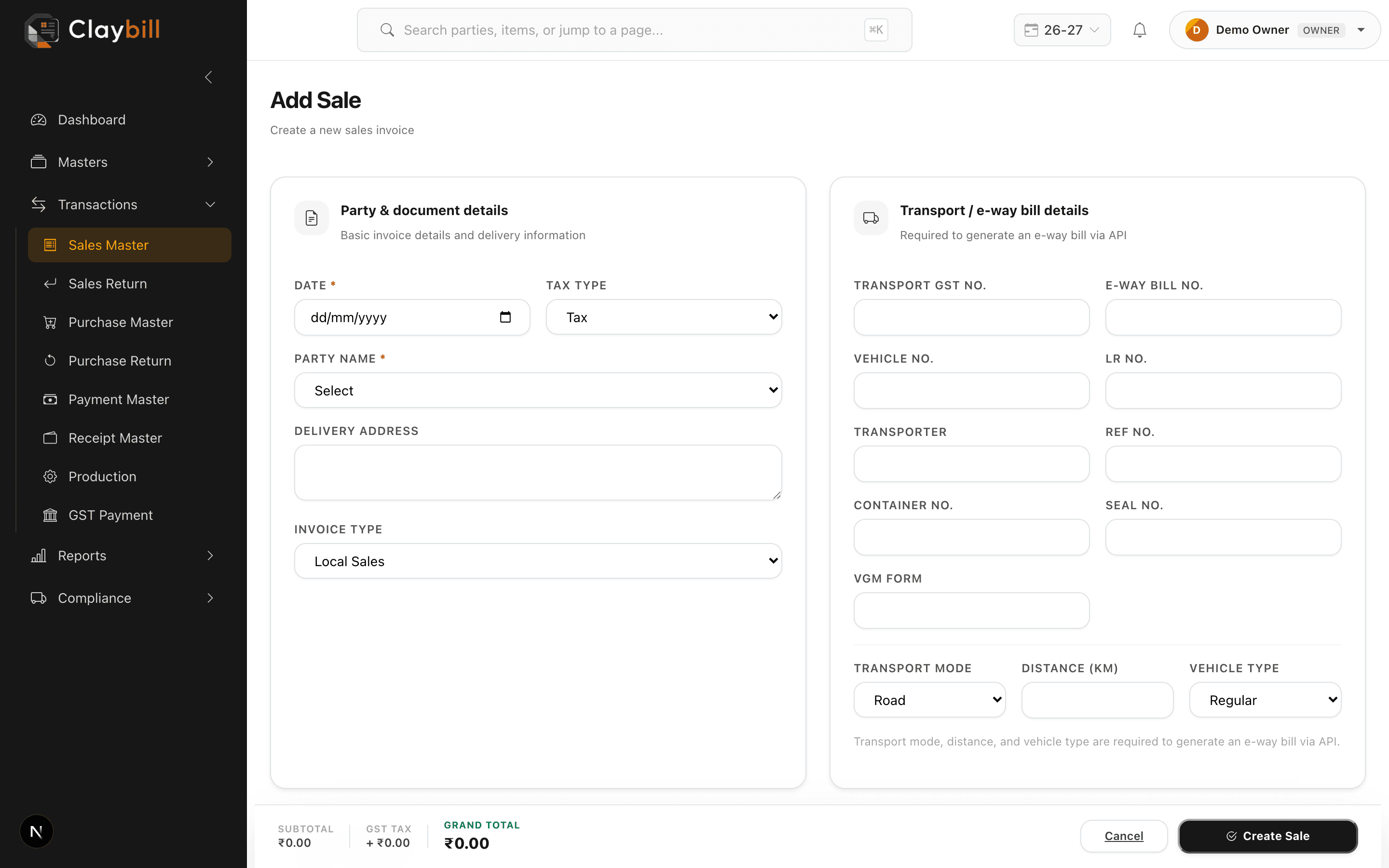
"Do I need an E-Way Bill or an E-Invoice for this tile dispatch?" is one of the most frequent questions from growing ceramic manufacturers and distributors. While both are pillar components of the Indian GST system, they serve entirely different legal purposes and are governed by separate technical portals.
Let us break down the exact differences, turnover criteria, and practical scenarios where a single shipment requires both.
1. The Fundamental Difference
- ✓E-Way Bill (EWB): Regulates the Physical Movement of Goods on the highway. Its primary purpose is to ensure that goods being transported in a vehicle are backed by legitimate tax documents and to prevent unauthorized off-the-books transit.
- ✓E-Invoice (IRN): Regulates the Legality and Reporting of the B2B Invoice Document itself. It requires the electronic reporting of invoice data to the government's Invoice Registration Portal (IRP), which returns a digitally signed 64-character Invoice Reference Number (IRN) and QR code.